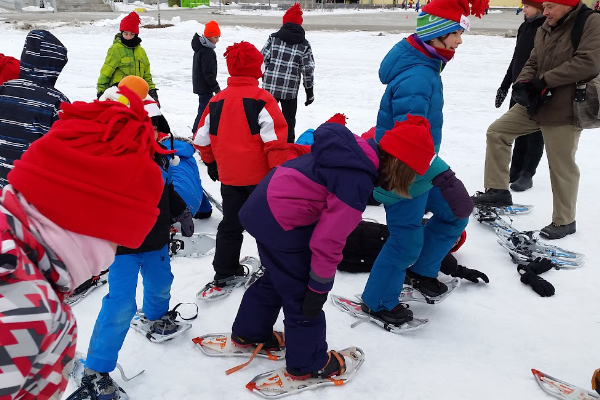
From Policy to Practice: When Winter Becomes a Classroom Again
For many Canadians, winter used to be a season of participation. It was when we learned how to dress properly, how to move carefully, how to read conditions, and how to adapt. Somewhere along the way, winter quietly became something to manage around instead of engage with.
This didn’t happen because young people suddenly became less capable. It happened because avoidance became easier. Schedules moved indoors. Screens filled the gaps. Risk was reduced by removing the environment altogether. What once felt normal now feels optional and increasingly unnecessary.
Winter itself hasn’t changed. It still offers something few other environments can: real conditions that demand attention, cooperation, and judgment.
A National Conversation Is Emerging
Recently, Kaelem Moniz, National Commissioner of Scouts Canada, articulated this shift clearly in his article Winter Outdoor Education.
His core point is simple and important: winter is not inherently dangerous. When approached with structure and care, it can become one of the most powerful learning environments we have, especially at a time when young people are spending less time outdoors and reporting higher levels of stress and disengagement.
It’s encouraging to see this conversation happening at a national level. The why of winter outdoor education is becoming clearer.
The Missing Piece: What It Looks Like in Practice
Where the conversation often stalls is not on values or evidence, but on implementation.
We’ve become much better at explaining why winter outdoor education matters. We’ve spent far less time showing what it actually looks like when it’s designed well, especially in settings that are accessible, close to home, and realistic for schools and families.
So what does good winter outdoor education actually require on the ground?
Designing for Learning, Not Avoidance
Effective winter programming isn’t about endurance or toughness. It’s about design.
In practice, that means:
Short, accessible experiences, not long expeditions
Clear structure and constraints that create safety
Treating cold as information, not an enemy
Prioritizing decision-making and teamwork, not physical output
Adults acting as facilitators, not problem-solvers
When those elements are in place, winter stops being something to fear and starts becoming something to work with.
Winter Wasn’t Romantic — It Was Normal

My favourite winter toque still has my name stitched inside it. A small reminder of a time when winter wasn’t feared, just lived in.
Growing up in the 1970s, winter wasn’t something we braced for or avoided. It was simply part of life.
My favourite toque today is still the one I wore as a kid. Inside, there’s a small stitched label that reads “Mike C. — Rm 6.” It wasn’t sentimental at the time. It was there because things got lost, classrooms were busy, and winter gear mattered.
I remember a string threaded through my snowsuit sleeves so I wouldn’t lose my mitts. Not as a safety feature, just common sense. You dressed properly, you learned how to move, and you went outside anyway.
We weren’t taught to fear winter. We were taught how to live in it.
That early competence mattered. It made winter feel manageable, even inviting. And it quietly taught something deeper: discomfort didn’t automatically mean danger, and preparation was empowering.
Why Challenge Creates Connection

On Mount Lafayette, the hardest winter days were often the most memorable, not because of the conditions, but because we faced them together.
Some of my most memorable winter experiences as an adult came years later, hiking Mount Lafayette in New Hampshire with close friends. The days that stayed with us weren’t the sunny ones. They were the days with freezing temperatures and strong winds.
Not because the conditions were enjoyable, but because they required us to adapt together.
Communication sharpened. Decisions mattered. The group became a unit, not competing with one another, but facing the environment side by side. It created a powerful sense of shared purpose: us versus the mountain.
That dynamic, shared challenge, clear limits, collective problem-solving is deeply human. It’s also exactly what well-designed winter outdoor education recreates at an age-appropriate scale for young people.
The goal isn’t severity. The goal is meaning.
What Youth Learn When Winter Is Treated Properly
When young people are given structured winter experiences, something predictable happens:
They learn they can stay warm by thinking, not just reacting
They learn that discomfort doesn’t automatically signal danger
Leadership emerges naturally under mild pressure
Confidence grows because it’s earned, not encouraged
These outcomes don’t require extreme conditions. They require thoughtful environments and adults willing to trust both the process and the participants.

A winter fire isn’t about survival. It’s about patience, teamwork, and learning to work calmly within real conditions.
The Adult Responsibility
Children don’t need perfect weather. They need adults who design responsibly.
Risk in winter isn’t managed by avoidance; it’s managed through systems—clear rules, appropriate gear, defined boundaries, and attentive facilitation. When those guardrails exist, winter becomes not a liability, but a teacher.
The real shift needed is not in children’s capacity, but in adult confidence.
Why This Matters Now
In the years following the pandemic, many young people have defaulted further indoors. Screens have replaced shared challenge. Winter has become something to get through rather than learn from.
Reintroducing winter as a learning environment isn’t about nostalgia. It’s about relevance. If we want young people to develop judgment, adaptability, and resilience, we need environments that ask for those traits—safely, deliberately, and accessibly.
Moving the Conversation Forward
Winter doesn’t need to be made easier for young people. It needs to be made accessible, structured, and trusted again.
Policy and advocacy open the door. Design and practice determine whether anyone walks through it.
That work doesn’t start with perfect conditions. It starts with showing up—and building environments where learning can happen, even when it’s cold.


