January 12 — A Better Week on the Bunkhouse Build
Last week, I’ll be honest, was disappointed and frustrated with how things were going up at the bunkhouse. Progress felt slow, the weather wasn’t cooperating, and it was one of those stretches where effort didn’t seem to match results.
This week was different.
A Window of Weather (and Momentum)
The week started with a few days of relatively mild temperatures, hovering around freezing. That change alone made a big difference. The ice on the trail up to camp softened enough that I could finally get the ATV up with supplies, and for the first time in a while, I could work without gloves.
Those small wins helped reset my momentum.
With access restored, I was able to focus on a major milestone: getting the insulated roof installed.

Rafters, Insulation, and Staying Dry
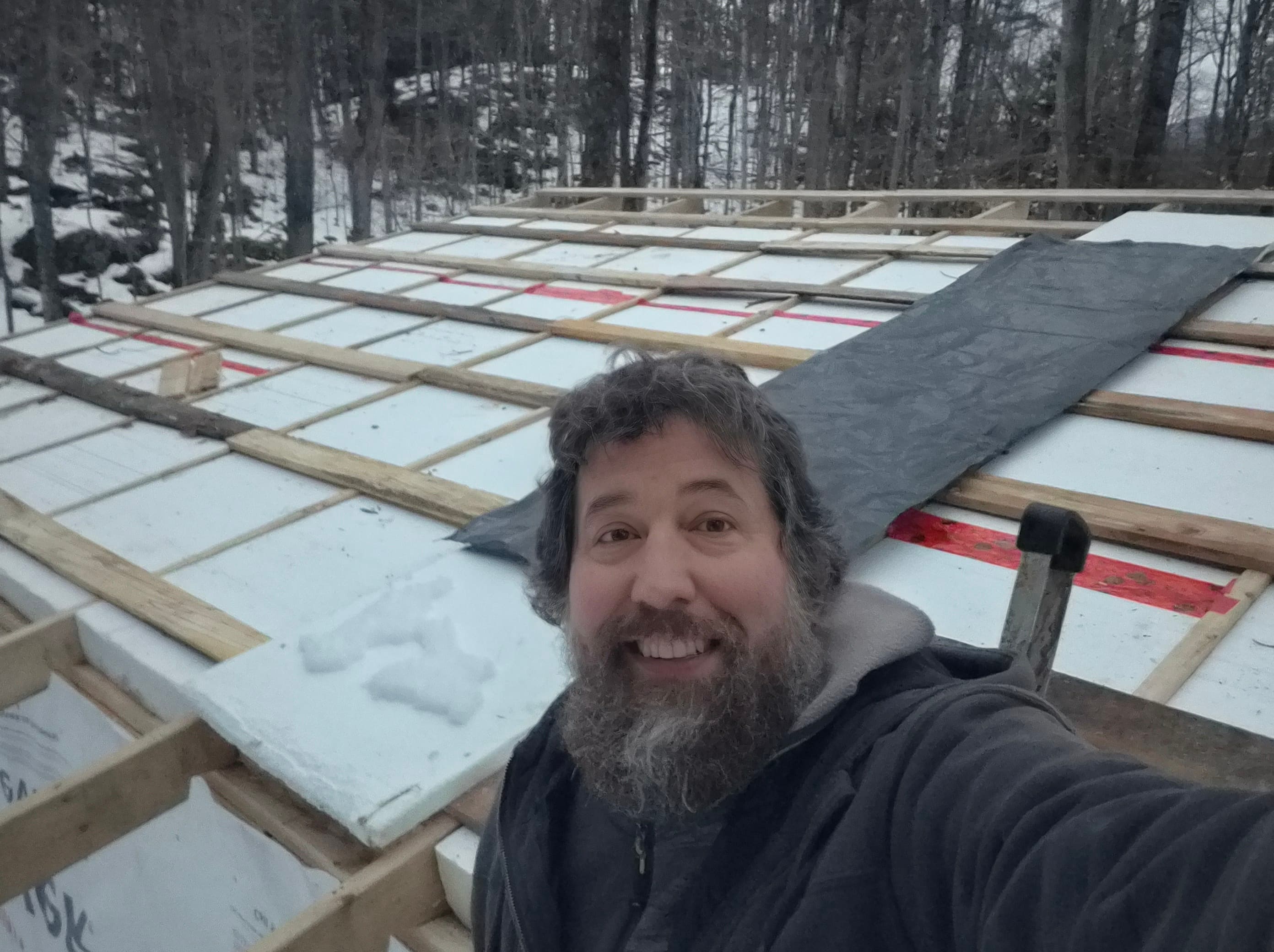
Before installing the insulation, I had to figure out a way to safely support it while working alone. To do that, I screwed small plywood squares onto the lower side of each rafter. These acted as temporary ledges to hold the insulation in place.
The process became a rhythm.
I would put up two rafters, then place the EPS insulation panels onto the plywood holders between them. The rafters were spaced based on the 2-foot-wide insulation panels I had cut earlier, so everything fit tightly without gaps. Once the insulation was seated, I taped all the seams before moving on to the next rafter.
Rafter by rafter, insulation panel by insulation panel, the roof slowly came together.
That timing turned out to matter. Shortly after the insulation was fully installed and taped, we had a full day of rain.
At this stage of the build, rain is never ideal. But the taped seams did their job—very little water made it inside. This isn't to say the floor was "dry". It still had a layer of trampled snow on it from before which melted when the bunkhouse rose above freezing.
When temperatures dropped again after the rain, that melt turned into ice inside the bunkhouse, something I’d be dealing with later as work continued.
Milling More Strapping
With the insulation and rafters complete, the next step was roof strapping. Partway through the process, it became clear that I didn’t have enough strapping milled to finish the roof.
So I shifted gears and spent time working on the sawmill. That was important work in its own right, this build depends on being able to produce material as needed, not just when conditions are perfect. Once the additional strapping was milled, I could get back to the roof.
In total, installing the strapping alone took 460 screws. It’s repetitive work, but it’s also one of those steps where the structure really starts to feel solid and intentional.

Snow on the Roof and Careful Footing
The day after the rain, we got about 10 cm of fresh snow, which meant another challenge: shoveling the roof.
At this stage of the build, that’s a careful job. I had to make sure I stepped only on the rafters. If I stepped on the EPS insulation, I would have gone straight through. The freeze–thaw cycle also left some of the wood with a nearly invisible layer of ice which is easy to miss, easy to slip on.
The upside is that now there are rafters and strapping to stand on, which makes everything safer than it was earlier in the build.
Working “Inside” for the First Time
By the time I finished installing the last of the strapping, the weather had turned colder and windier. What surprised me was how much warmer it felt inside the bunkhouse even with the doors and end walls still open.
That was a satisfying moment. For the first time, I was genuinely working inside the structure. It still looks unfinished, but it’s already starting to behave like a real building.

Tin Roofing Is Next
I ordered the tin for the roof, and it should be ready for pickup today or tomorrow. Once the tin is on, I’ll be able to move forward regardless of weather, which is a big mental shift at this point in the project.
The next challenge will be logistics. The roof needs thirteen 16-foot-long sheets of tin, and my ATV trailer is only 7 feet long. Between the length and the weight, hauling them up the hill by trailer isn’t realistic.
Realistically, I’m preparing myself for the likelihood that I’ll have to carry each sheet up the hill by hand, one at a time. It’s not ideal—but it’s doable. And it'll mean I can skip "leg day" for the next month or two.

Ending the Week in a Better Place
This week didn’t just move the build forward physically—it improved my headspace. The roof structure is complete, the space feels enclosed, and progress is visible again.
There’s still a lot of winter ahead, and plenty of work left to do. But after last week’s frustration, it feels good to end this one with solid progress and a clear next step.
More to come.


